
on wholeness
the way we see each other and ourselves

Years ago in college, when I was a young aspiring social worker (who swore she would never work in housing or substance use), I was introduced to an idea that became foundational in the way I think about people, though I didn’t know it at the time. In a non-social work class I was assigned a 20 page reading by Eve Tuck, a Unangax professor and scholar of indigenous studies. This 20 page reading was a letter titled Suspending Damage: A Letter to Communities.
In this open letter, Tuck asks researchers, scholars, and educators to consider how they frame and view the people and communities at the center of their studies. Research, especially research intended to obtain funding or make a compelling argument, only focuses on the tragedy and pain experienced by a group. While it is certainly an effective way to sway opinions and tug heart strings, it often has unacknowledged consequences. Telling stories about communities in this way reduces entire swaths of people to little outside of victims, narrowing their stories and histories in ways that are ultimately hurtful.


This isn’t to say that acknowledging victimization, oppression, and pain are not important, but when outsiders design studies around the idea that trauma is the most important aspect of a people, it erases their wholeness and humanity.
Tuck calls this damage centered research, research that reduces communities to the pain they’ve endured. She instead proposes what she calls desire centered research- centering the hopes, dreams, and desires of communities rather than limiting them to their pain.
The letter is dense and beautiful, I think you should read it, especially if you are a researcher or ever intend to be one.

Many years after I first read Tuck’s letter, I still think about it often.
It’s easy to look at people and only see how hurt they are, especially if you spend a lot of time with those who are most impacted by systemic oppression. It can feel like all that there is is… well, damage. I will admit, many days I stare out of my office window and try to breathe through the enormous, palpable hurt all around me.
Hurt is heavy and deserves to be carried by many hands.
But you know what else deserves to be carried by many hands? Joy. Hope. Desire. In moments when we look around and all we see is hurt, joy and hope can be incredibly hard to find. This is all the more reason to be attuned to the range of experiences and feelings that make up all people and communities- the more holistically we see each other, the more whole we all get to be.


While damage centered research is a concept developed to describe how we see those outside of ourselves and our communities, i think it is worth mentioning that we have to look at ourselves through a holistic lens too. It is easy to reduce ourselves to the things that have hurt us, the mistakes we’ve made, our chronic pain or mental health conditions, and all of the things we don’t like about ourselves. We define ourselves by our jobs, by our place in the birth order, or by how tirelessly we neglect ourselves to help others. All of those things are important, but there is more there too. Every part of us deserves to be welcomed in, even when it is hard.
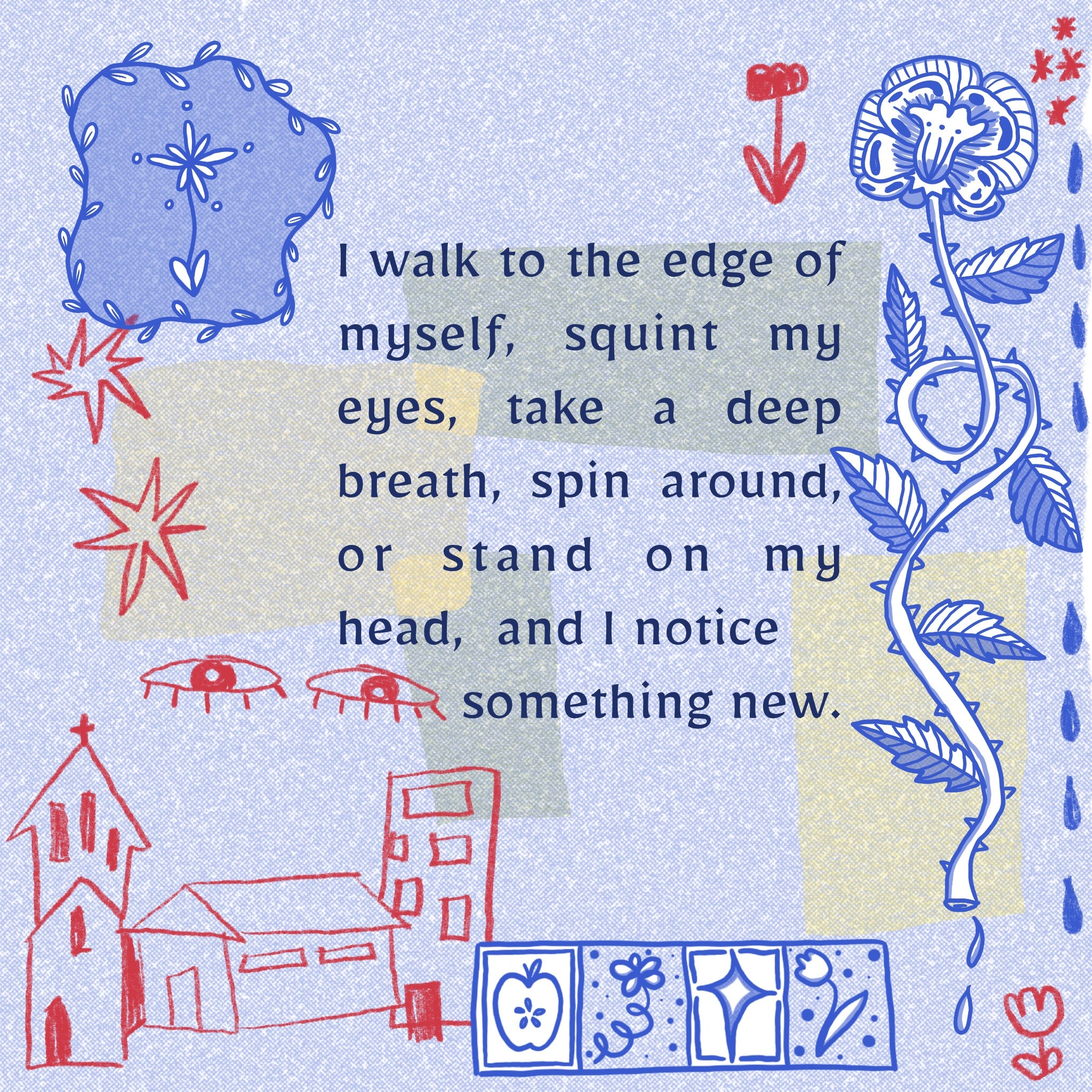
Thank you for reading!!! Also can you believe I drew that flower??? I really surprised myself with that.
As always you give me things to think about. Thank you for being you!
That flower is a manifestation of who you think you are and who you really are. Continue growing. Continue being your beautiful self.
This is great! I'm finally starting to be able to see myself as more than my chronic pain and it is such a relief.
That flower really is impressive!